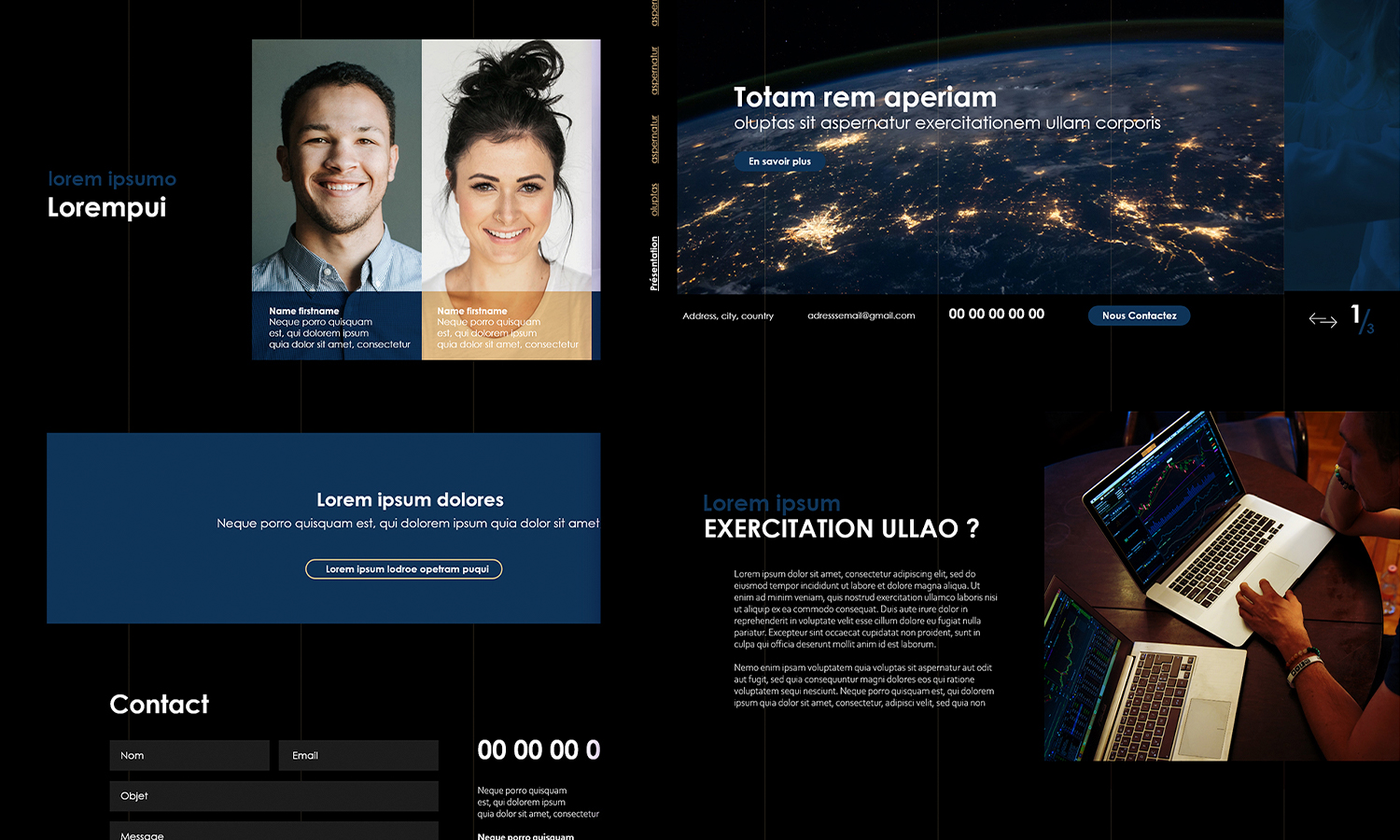
One Page Website
One Page Website

Despite being a relatively recent concept, the One Page Website has swiftly become one of the most favored types of websites. These micro sites, encompassing sales and specialized functions, have gained immense popularity due to their cost-effectiveness and practicality. These structures, presenting content on a single page, typically convey their purpose in a brief and concise manner.
In the one-page website type, designed to articulate all information on a single page, content is organized into sections rather than separate pages. The menus in this type of website direct users to specified sections rather than separate pages.
What was initially favored by small-scale organizations, personal ventures, and those promoting a single product has now gained universal acceptance. And it has evolved to accommodate a diverse range of structures. This system is now being embraced by structures featuring multiple product and service varieties.
The primary advantage of a one-page design website is its ability to be published swiftly. A site with pre-existing content can be published within a span of 48 hours. Additionally, it is more cost-effective compared to a traditional website. Moreover, for straightforward organizations, it provides end-users with the opportunity to express themselves directly. Due to the limited time spent on these sites, there is minimal navigation between pages.
While it may initially appear challenging for search engines, one-page websites can achieve significant success with a well-optimized SEO infrastructure. Performance stands out as one of the crucial parameters for search engines. Due to the limited content in terms of CSS, JavaScript, and images, one-page sites can achieve high-speed performance.
The foremost consideration when crafting a one-page site for an individual or a company is to ensure a robust design and impactful expression. Given the need for swift communication of their purpose, these sites should embrace a simple and uncomplicated design.
Furthermore, structures designed for rapid performance should avoid unnecessary code redundancy to prevent any unnecessary complexity. To ensure swift indexing by search engines, it is essential to minimize the use of CSS and Javascript, preventing any hindrance to quick listing.
Another distinguishing feature of the one-page site type is its ability to seamlessly present content, offering a fluid and coherent user experience. In sites comprised of sections, it is crucial to design a well-organized and hierarchical menu and section structure for a cohesive and structured user experience.
One-page websites distinguish themselves by being more cost-effective compared to other types of websites. Given the streamlined code structure, quicker design implementation, and reduced space requirements, it is expected that one-page websites command a lower price point. The pivotal factor in determining the price of these websites is primarily the intricacy of the site's infrastructure.
For sites developed in PHP language tailored to the specific needs of a company, rather than using pre-made systems, the pricing is typically determined based on the required functionalities. The pricing is determined based on specific applications, such as the inclusion of an e-commerce module or a multi-language module. It's noteworthy that One Page website prices are generally recognized for being more affordable, as mentioned earlier.
Similar to every website building process, the initial phase in calculating time for such websites involves determining the site architecture and placing content appropriately. Upon completion of the site architecture and template determination, it may be reasonable to allocate a maximum of 5 days for the building process of a One Page website.
Allocating a five-day period may be reasonable for coding the site, handling database operations, configuring the management panel, and implementing search engine optimization. In a turnkey operation, launching these single-page websites can be achieved within a maximum time frame of one week.